Table Of Content
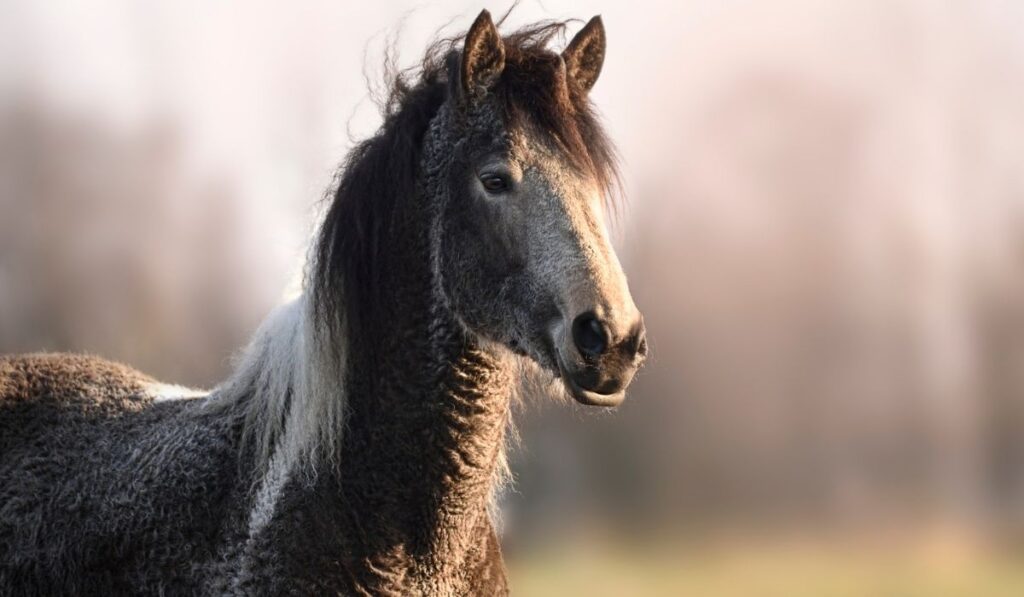
The two men encountered three wild horses covered in curly ringlets in the remote Peter Hanson mountain range in central Nevada. NOTE that Most horses expressing the curly gene will not be as curly as the horse shown below. In 1956, two young, curly-coated stallions were bought by a man from Mountain View, Missouri, named Vic Clemens. Clemens bought the horses at an auction in Tennessee and had them shipped by train to Mountain View. In 1932, during a devastating winter in the Three Bar Ranch country, deep snow and bitter cold hung on for months. When spring came and the ranch horses were gathered from where they'd "wintered out," the only horses the Damele boys could find alive were curly-haired horses.
Moscow on horseback: how city revives national traditions associated with horses / News / Moscow City Web Site - mos.ru
Moscow on horseback: how city revives national traditions associated with horses / News / Moscow City Web Site.
Posted: Sun, 03 Sep 2023 07:00:00 GMT [source]
How much does a Curly Horse cost?

Their strength, agility, and adaptability make them valued partners in a wide range of equestrian activities. Whether in the show ring or on the trail, a horse with curly hair is sure to attract attention and admiration. One of the most notable features of a horse with curly hair is, of course, their curly coat. This unusual trait can vary in degree from loose waves to tight ringlets and covers their entire body, including their mane and tail.
What it’s like to Ride a Curly Horse
Another interesting characeristic of the Bashkir Curly horse is they sometimes do not have ergots, or only have small soft chestnuts, on their legs. They also have wide set eyes, which is believed to give them a wider range of vision and is characteristic of Oriental breeds. This breed is easy to identify from the moment a foal is born, as they have curly eyelashes, thicky curly coats, and curls inside their ears. The unique adaptability and resilience of curly-haired horses have contributed to their survival and proliferation over time. In harsh climates and challenging conditions, their curly coats provide insulation and protection, allowing them to thrive where other breeds may struggle. Additionally, their hypoallergenic qualities make them a preferred choice for individuals with allergies to traditional horse hair, further enhancing their desirability and popularity.
How to Adopt or Buy a Bashkir Curly Horse
And Benny, bought and moved to the Dry Creek Ranch that's on the Pony Express trail 25 miles southwest of the Three Bar Ranch. A Pony Express horse-changing station had been located near the Dry Creek Ranch headquarters during 1860 and 1861. The family also purchased the Ackerman Ranch, 12 miles north of Dry Creek. The American Bashkir Curly Registry (ABCR) and the International Curly Horse Organization (ICHO) are diligent in preserving and protecting the Curly Horse.
The famous curly coat
“In 1952, while living in Alaska, I acquired a good buckskin horse with a wavy coat, which he shed in the summer along with his mane and tail. I rode, packed and used Bishop for 17 years and never did he see grain or shoes. Each year he consistently outworked a team of twenty pack and saddle horses which had to have shoes. Bishop stayed in good shape while they lost weight and repeatedly had to be replaced as time went on in the hunting season.
Curly Horse
This adaptability to extreme climates is a testament to the breed’s robust nature, making them a favored choice for many horse owners who live in regions with challenging weather conditions. Though curly coats in some breeds are linked to specific health issues, the Curly horse breed is relatively healthy. Many owners claim these horses are also hypoallergenic, but allergen studies in the breed yield conflicting results.
The exact origins of the Curly Horse, also known as Bashkir Curly, American Curly or North American Curly, remain somewhat of an enigma, adding a layer of intrigue to this already fascinating breed. The first recorded sightings of these distinctive horses date back to the early 19th century in North America. However, their lineage before this period continues to be a subject of debate among equine historians and enthusiasts.
Curly horses steal the show at Mimosa Hills Farm (w/video) - Morganton News Herald
Curly horses steal the show at Mimosa Hills Farm (w/video).
Posted: Sat, 12 Sep 2020 07:00:00 GMT [source]
To prevent weight gain in your American Curly while still providing access to free-choice forage, consider using a slow feeder or hay net. Slow feeders extend foraging time while regulating how much hay your horse consumes. However, providing unrationed or free-choice hay is best to ensure your horse never goes long periods without access to forage. Horses evolved to graze on roughage, naturally consuming a near-continuous stream of forage throughout the day. Feeding a forage-based diet not only support your horse’s digestive health, but also meets their psychological needs to express grazing behaviours. These horses are hardy animals who thrive living natural lifestyles with plenty of turnout.
How Long Are Horses Pregnant? (Gestation Period) Vet Reviewed Science & Facts
This may explain the frequency with which the curly gene occurred within early Mustang herds and still –in certain herds –today. There appears to be no specific health issues in relation to the Bashkir Curly horse. At one time people thought they may suffer from Cushing’s disease, which causes hair to grow unevenly and winter coats not properly shedding on time.

It has been proven since then that the Bashkir Curly horse does not actually have this issue. But the uniqueness of the Curly Horse doesn’t stop at their coat and hypoallergenic traits. These horses also possess a robust constitution, sturdy hooves, and a resilient nature. They are known for their endurance and ability to thrive in varied climates and conditions, making them a versatile and adaptable breed. Whether for work or pleasure, the Curly Horse’s unique characteristics make them a standout choice in the equine world.
It is believed that these horses were recorded in 2nd-century Asian artwork. One theory implies that the Curlies were brought from India to Nevada by Tom Dixon during the late 19th-century. But these horses could not have been the foundation stock because the curly horse breeds were already owned by the Sioux Indians in the early 1800s. Another theory hints that they were brought to America by the Spanish conquistadors, and so it has Iberian ancestry. Evidence suggests that horses with curly coats have existed throughout the evolution of the equine species. Thick, curly coats were a favourable adaptation for horses in cold climates.


No comments:
Post a Comment